
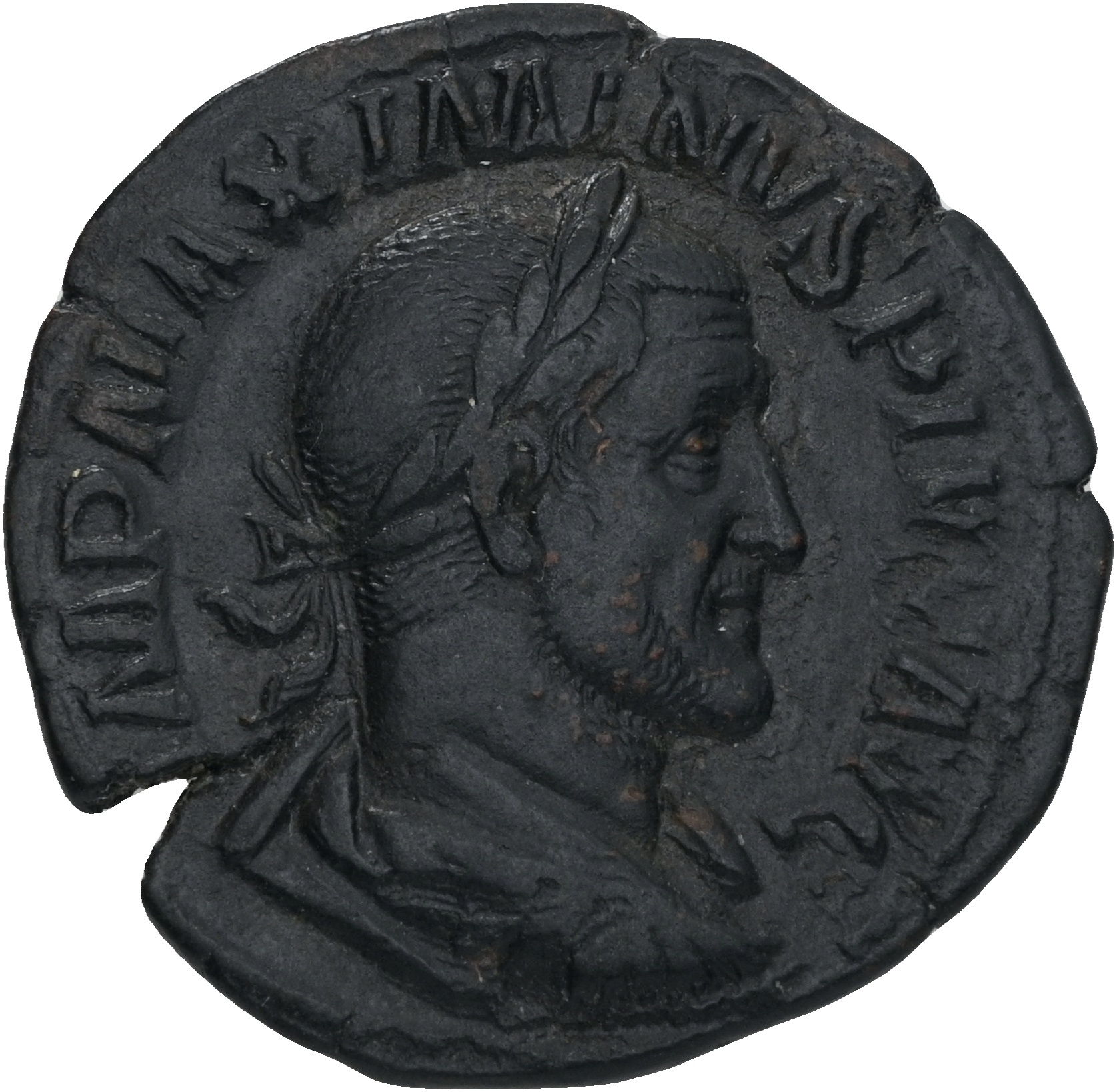
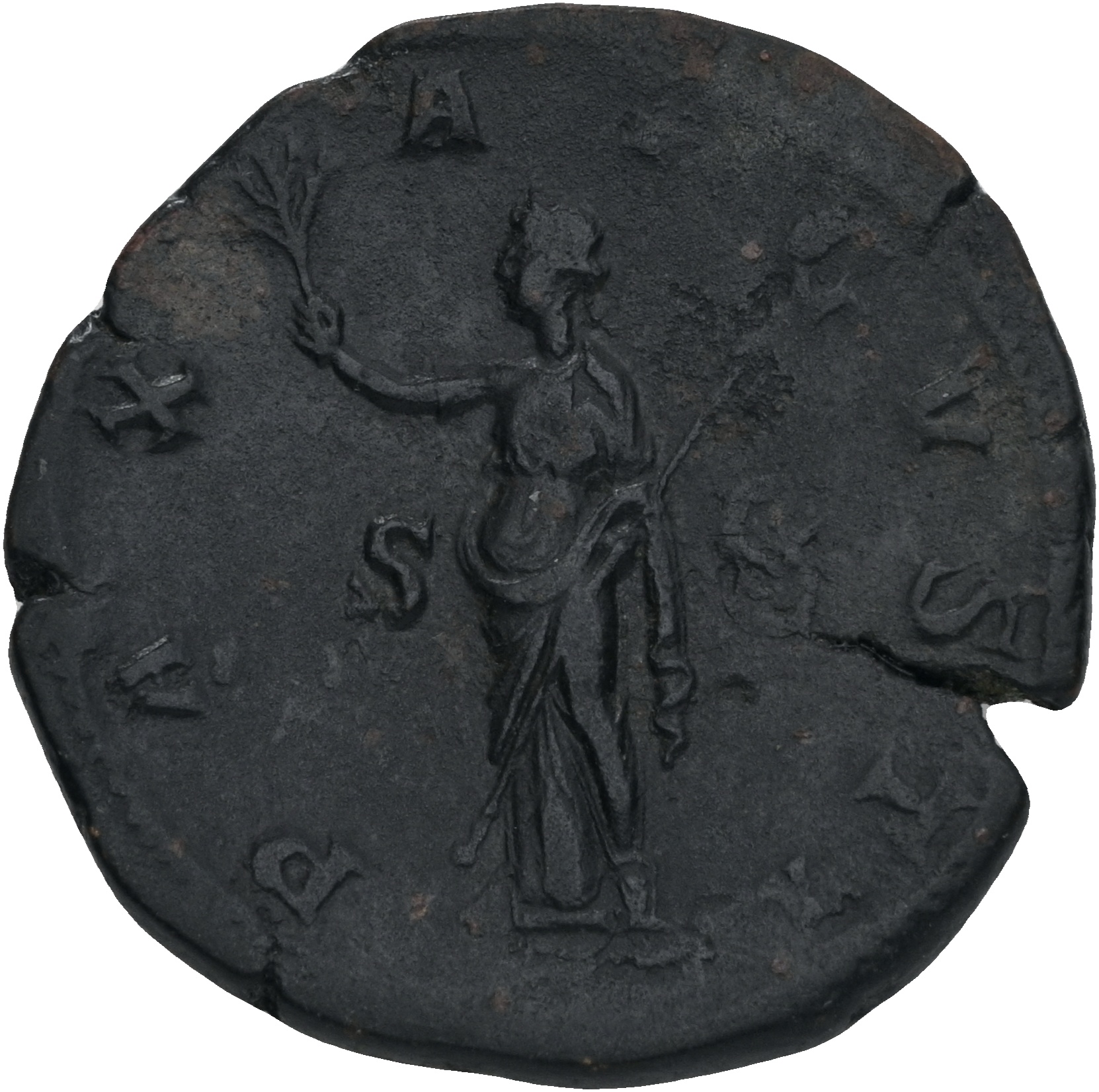
Æ sestertius Maximinus I Thrax (235-238 e. Kr.), 15,24 g, Roma, 1+
kr 2.500
Product information
Sestertius – Maximinus I Thrax (AD 235–238)
Maximinus Thrax was one of the most unusual emperors in Roman history. His epithet Thrax refers to his origins in Thrace, a region encompassing parts of present-day Bulgaria, Greece and Turkey. He came from relatively humble beginnings and rose through the ranks of the Roman army. When Emperor Severus Alexander was murdered by his own soldiers in 235, Maximinus was proclaimed emperor. He is generally regarded as the first of the so-called soldier emperors.
The contemporary historian Herodian describes Maximinus as a man of extraordinary stature and physical strength. Later accounts claim that he stood approximately 2.40 metres tall, although this is probably an exaggeration. His coin portraits depict a powerful man with a prominent chin, heavy brow and rugged facial features.
Maximinus was above all a military commander. In 235, he led his army across the Rhine and conducted an extensive campaign against Germanic tribes. Following his victories, he received the honorific title Germanicus Maximus. He subsequently transferred his military headquarters to Sirmium, in present-day Serbia, and led further campaigns against the Dacians and Sarmatians along the Danube. His military achievements were considerable, but the campaigns demanded substantial resources and contributed to increasingly strained relations with the Senate and the population.
Maximinus never visited Rome during his reign. When a rebellion broke out against him in 238, he marched his army towards Italy. The city of Aquileia refused to open its gates, and the ensuing siege developed into a disaster. Supplies dwindled, the soldiers lost confidence in their commander, and eventually both Maximinus and his son were killed by their own men. According to Herodian, their severed heads were sent to Rome.
This sestertius was struck in Rome during the reign of Maximinus. The obverse depicts the emperor wearing a laurel wreath, while the reverse features Pax, the personification of peace, holding an olive branch and sceptre. The inscription PAX AVGVSTI translates as “the Emperor’s Peace”. The choice of imagery is particularly interesting for a ruler who spent almost his entire reign with the army along the frontiers of the Empire.
Roman Empire
Maximinus I Thrax, AD 235–238
Sestertius
Bronze / 15.24 g
Rome
Grade: 1+
RIC IV.2 81
In stock
Related products
-

128 AR denarius Hadrian (117-138), Roma, 0/01
kr 9.000
Add to basket
In stock
-

AR denarius Septimius Severus (193-211 e. Kr.), 1+/01
kr 6.000
Add to basket
In stock
-

41 f. Kr. AR denarius Marcus Antonius & Octavian, Ephesos, 1+/01
kr 20.000
Add to basket
In stock
-

ca 217-215 BC Æ semuncia Republikk anonym (5,46 g ), Roma, 1+
kr 5.500
Add to basket
In stock